
Auto Dealer Websites From DealerClick
Add the Premium website or the Premium Pro website module to your DealerClick DMS. Both are listed with their prices on the DealerClick pricing page.
What a Dealer Website Has to Get Right
DealerClick sells two website modules by name. The sections below cover what any dealer website has to do well, and what DealerClick already keeps on file for your vehicles and leads.
Premium Website and Premium Pro Website
DealerClick sells two website modules, the Premium website and the Premium Pro website, each added to your DMS and billed per rooftop. Both are listed by name with their prices on the DealerClick pricing page, so you can compare them next to the rest of the catalogue before you talk to anyone.
A Dealer Website Starts With Accurate Inventory
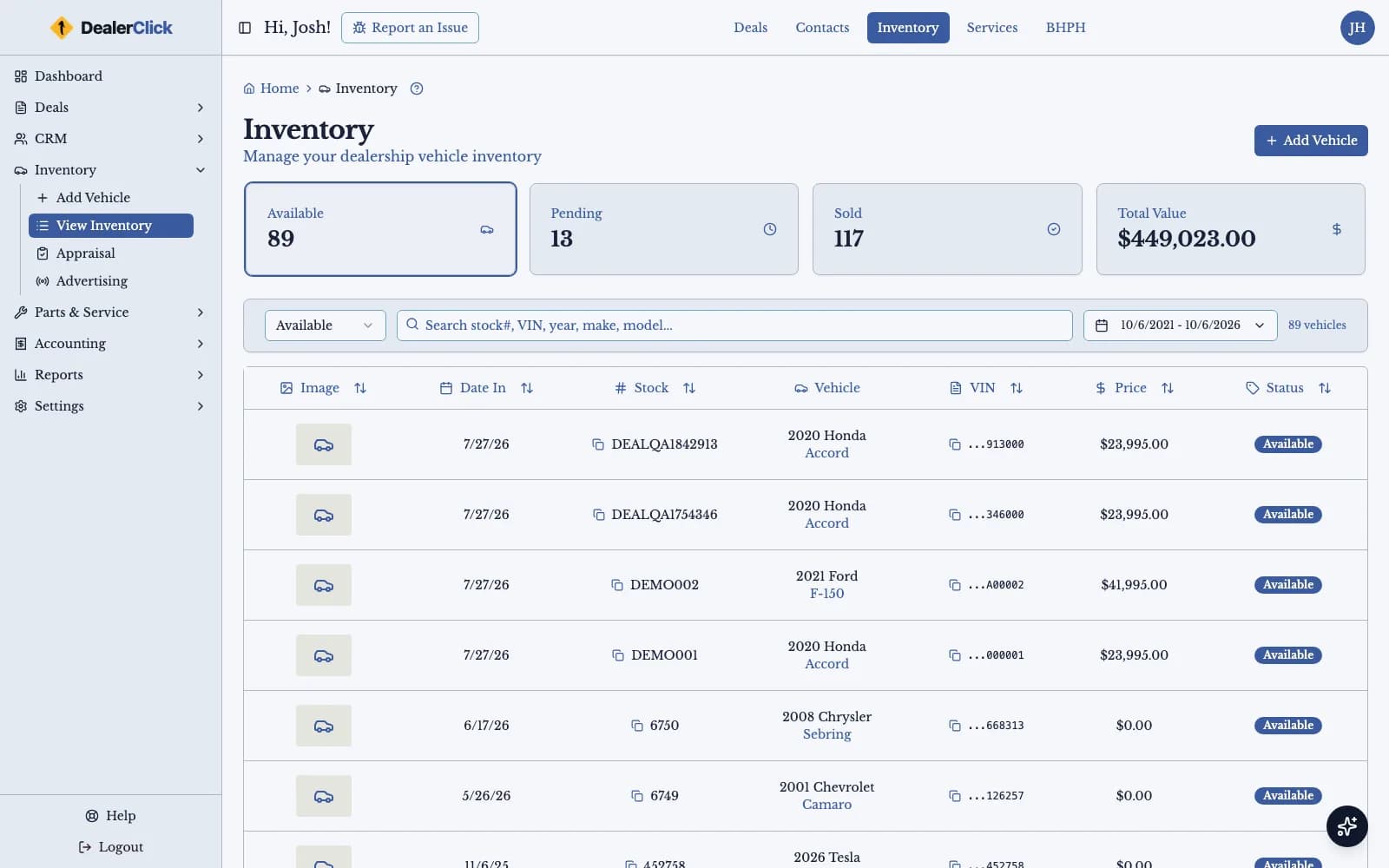
Shoppers judge a dealership by whether the vehicle they saw online is still on the lot. In DealerClick, a vehicle is added once, VIN decoded, and kept current in inventory, so the record behind your listing feeds is the same record your sales desk works from. Whatever a dealer website is built on, it should be held to that same standard.
Clear Pricing Builds Trust Before the Visit
Buyers arrive having already compared prices across several sites. A dealer website that shows an honest price, the fees a buyer should expect, and a straightforward way to ask a question earns more calls than one that hides the number behind a form.
Every Inquiry Should Land in One Place
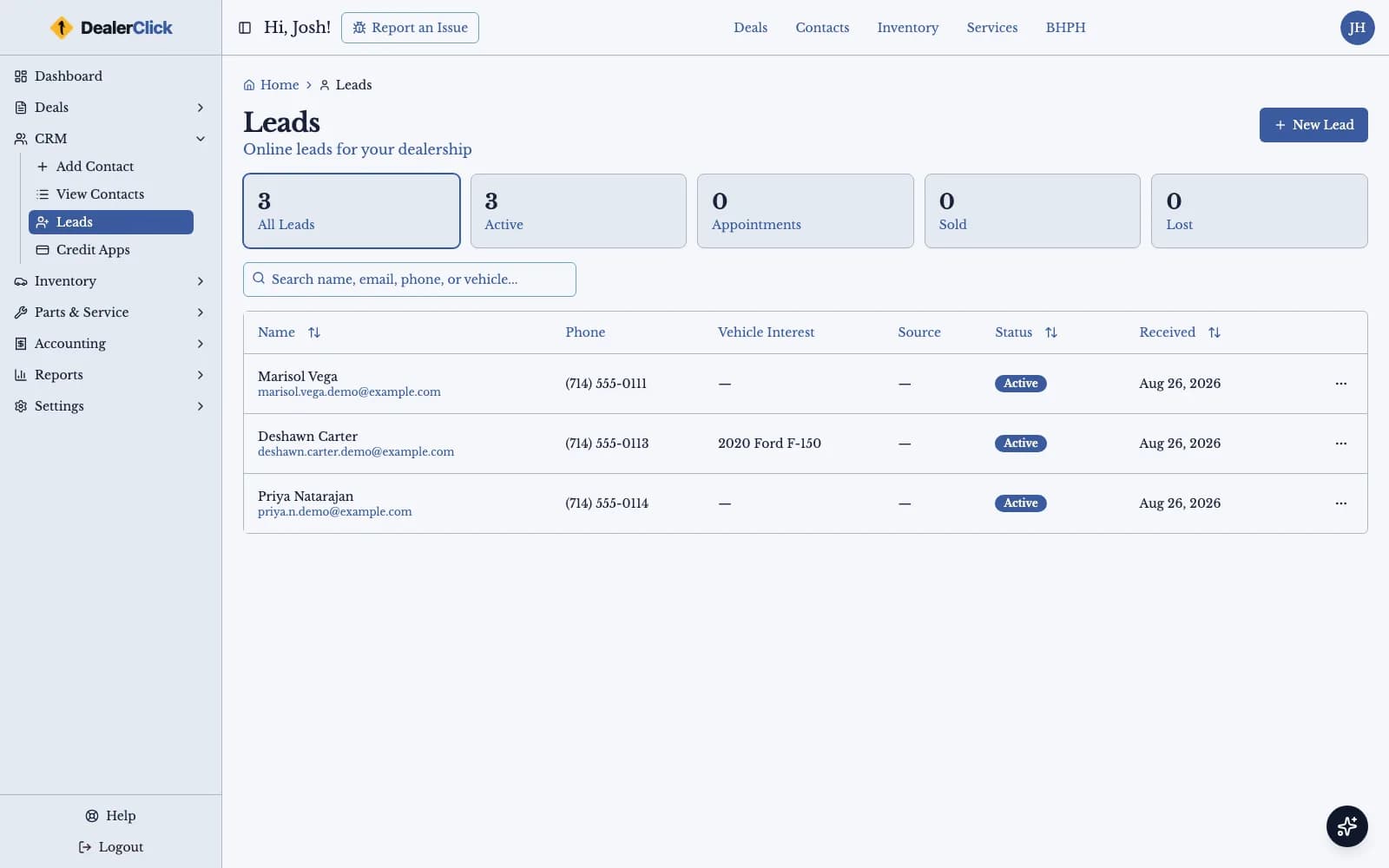
Leads from AutoTrader, Cars.com and CarGurus reach DealerClick CRM through a direct connection, so a salesperson works one list of contacts and leads instead of checking each marketplace inbox. Whatever a dealership's website is built on, its forms should feed that same list.
Being Found by Shoppers Near the Lot
Most vehicle searches start close to home. Consistent name, address and phone details, a page for each rooftop, and vehicle pages that a search engine can read help a dealership show up when a nearby shopper looks for the model it has in stock.
A Website That Looks Like Your Dealership
A shopper who drives past the lot and then opens the website should recognize the same store. Colors, logo, photography of the real building and the people who work there, and a clear statement of what the dealership specializes in matter more than any template.

History Reports and Valuations From the DMS
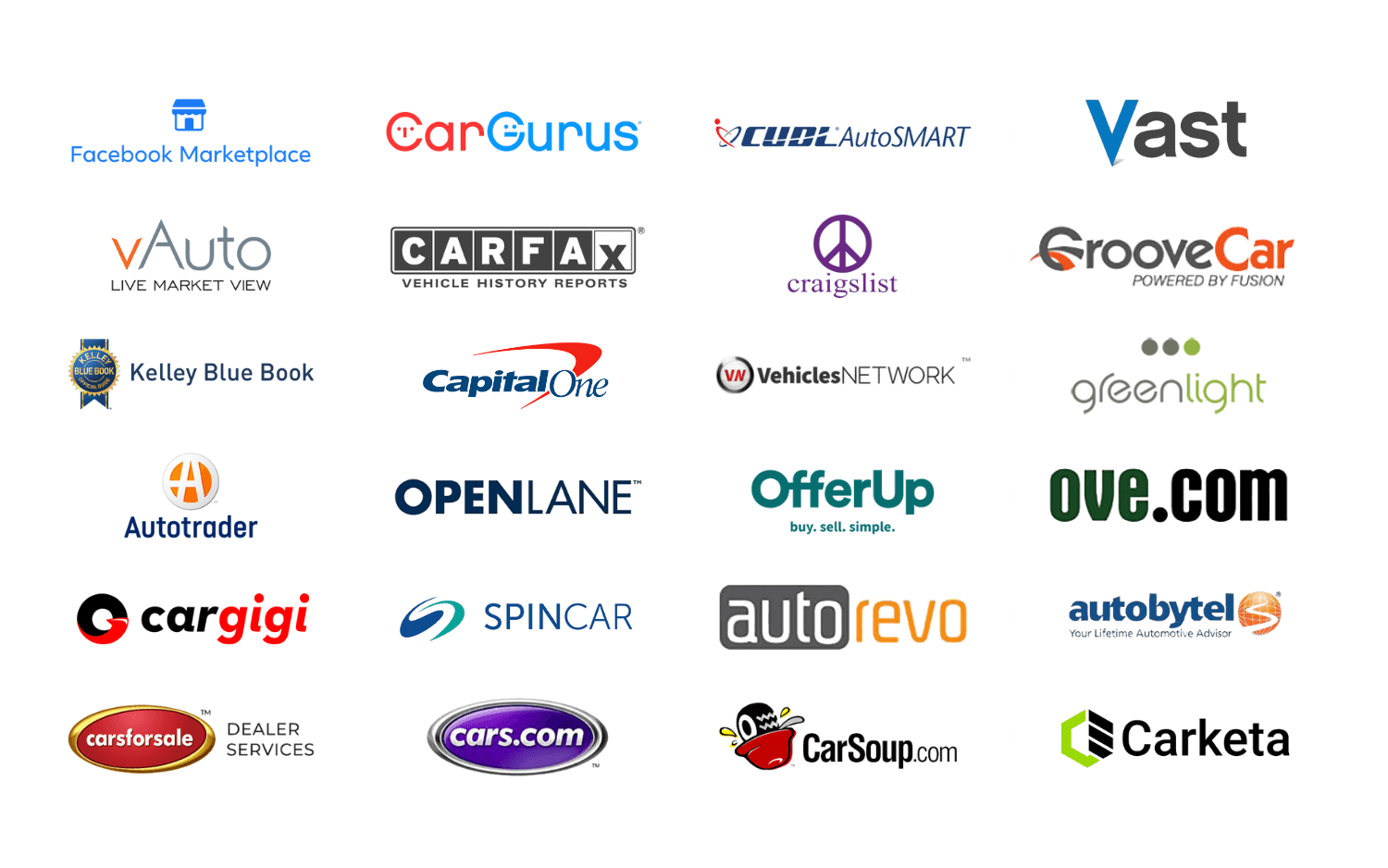
DealerClick inventory pulls Carfax and AutoCheck vehicle history reports and Kelley Blue Book valuations next to the VIN-decoded specs. A used-vehicle shopper wants that history before they visit, and a dealership that already has it on file can answer the question the first time it is asked.
Built for the Shopper on a Phone
Most dealer website visits now happen on a phone, often from the lot across the street. Pages that load quickly on a cellular connection, photos that are large enough to judge a vehicle, and a phone number that is one tap away decide whether that visit turns into a call.
Listing Feeds and Secure Website Forms
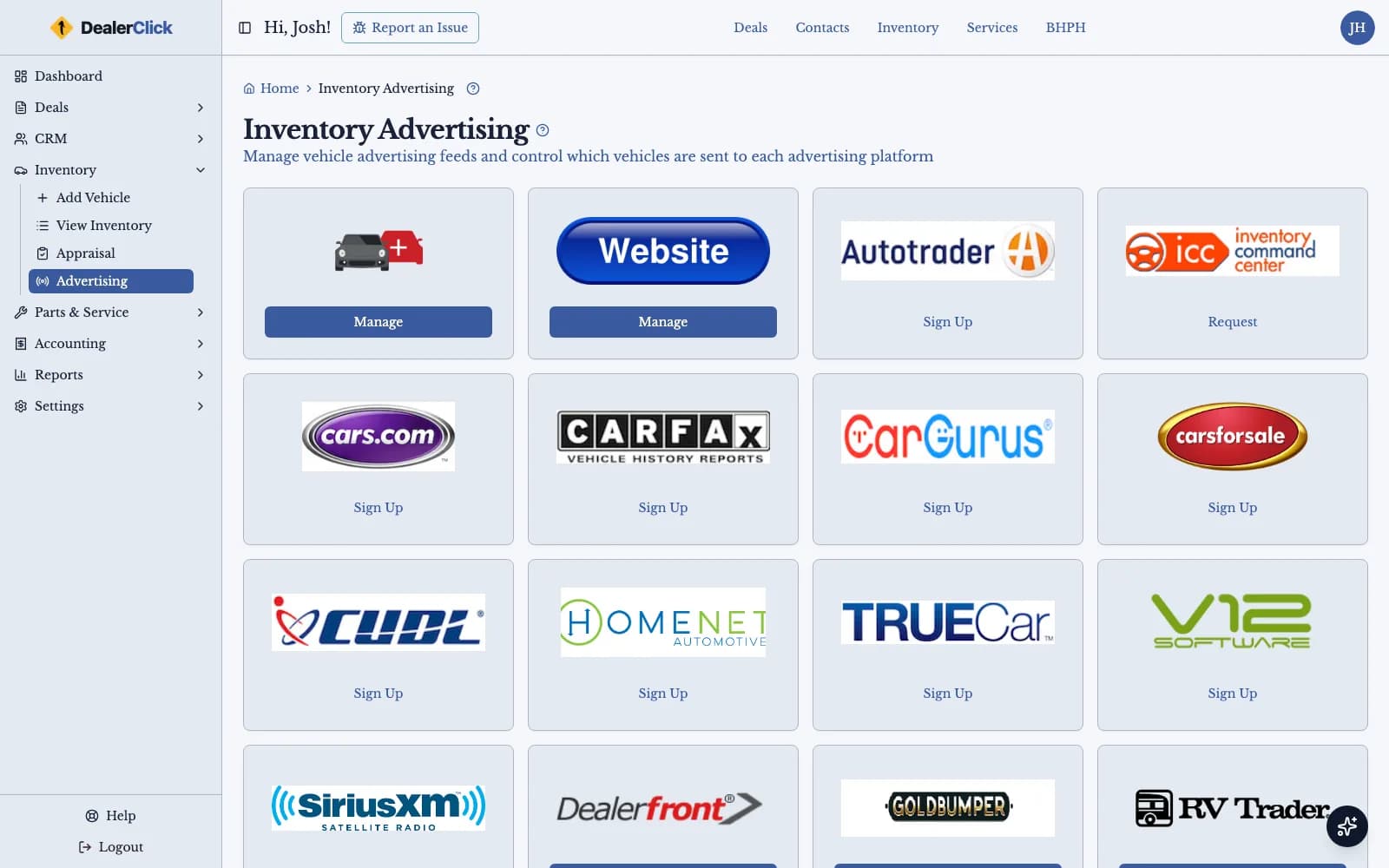
DealerClick sends your inventory to AutoTrader, Cars.com, CarGurus, Facebook Marketplace and Craigslist (where available), and you choose which vehicles go to each feed. On a DealerClick website, forms that sync to CarGurus run through Cloudflare Turnstile, AES-256-GCM encryption, and Zod validation.
What a Dealer Website Has to Do, and What DealerClick Sells
The Website Is the First Showroom Visit
For most buyers the first visit to a dealership happens on a phone, weeks before they set foot on the lot. They compare the same vehicle across several sites, read what other buyers say about the store, and decide whether it is worth the drive. A dealer website wins that visit by being accurate and quick: the vehicle in the photos is the vehicle on the lot, the price is the price, and the way to ask a question is obvious from every page.
That is why inventory matters more than design. A vehicle that sold on Saturday and is still listed on Monday costs more trust than any layout can earn back. In DealerClick, a vehicle is added once and VIN decoded in inventory, and the same record carries its Carfax or AutoCheck history report and its Kelley Blue Book valuation, so the facts a used-vehicle shopper asks about are already on file when the question comes in.
Photos do the rest of the selling. Shoppers expect twenty or more pictures of a used vehicle, taken in good light, covering the interior, the tires and any wear the buyer will notice in person anyway. A short, honest description written by someone who has driven the vehicle tells a shopper more than a list of option codes, and it gives them a reason to call about that vehicle rather than the one down the road.
Two Website Modules, Priced in the Open
DealerClick sells two website modules: the Premium website and the Premium Pro website. Each one is added to the DealerClick DMS and billed per rooftop, and both are listed by name with their prices on the DealerClick pricing page, next to every other module in the catalogue. A dealership can see what a website costs before it books a call, and can compare that number with what it pays its current provider today.
When you compare website providers, the price is only one line. Ask who owns the domain and the content if the contract ends, how a sold vehicle comes off the site and how quickly, where each form submission goes and who sees it first, and what happens to your listings on the day you switch. A provider that answers those questions plainly is usually one that will answer the next ones plainly too.
It also helps to decide, before the first demo, what the website is for. For one dealership it is mainly a place to send listing traffic; for another it is where repeat customers book a visit or ask about a trade. Writing that down keeps a comparison focused on the few things that matter to your store, instead of on a long list of features that look good in a presentation and rarely get used.
Being Found Locally Without Extra Headcount
Most vehicle searches are local, so the basics of local visibility carry most of the weight. The dealership's name, address and phone number should read exactly the same on the website, on every map listing and in every directory. Each rooftop deserves its own page with its own hours and directions. Every vehicle page should carry readable text, year, make, model, trim, mileage and price, rather than leaving a search engine to guess from a photo.
Content helps when it answers what local buyers actually ask: how trade-ins work at the store, what documents to bring, which vehicles the dealership specializes in. A short, accurate answer written by someone at the dealership does more than a long article written for a keyword. Publish on a steady rhythm a small team can keep up, and update older pages when the answer changes instead of letting them drift.
Listing Feeds, Leads and Secure Forms
A dealer website is one storefront among several. DealerClick sends inventory to AutoTrader, Cars.com, CarGurus, Facebook Marketplace and Craigslist, where available, and the dealership chooses which vehicles go to each feed. Leads from AutoTrader, Cars.com and CarGurus reach DealerClick CRM through a direct connection, so a salesperson works one list of contacts and leads instead of checking each marketplace on its own.
Forms on a DealerClick website that sync to CarGurus, such as credit applications, trade forms and service requests, run through Cloudflare Turnstile, AES-256-GCM encryption, and Zod validation, as the CarGurus integration page describes. Whichever website a dealership runs, every form should record what the shopper agreed to, reach the right person quickly, and never leave a lead sitting unread in an inbox that nobody checks on a busy Saturday.
Both Website Modules Are on the Pricing Page
The Premium website and the Premium Pro website are listed by name with their prices, billed per rooftop, alongside every other DealerClick module.
Where a DealerClick Website Module Fits
Two named modules on one priced catalogue, with inventory, listing feeds and leads already kept in DealerClick.
Two Modules, Named and Priced
The Premium website and the Premium Pro website are both on the DealerClick pricing page, billed per rooftop, so the choice is made in the open.
One Inventory Record
Vehicles are added and VIN decoded once in DealerClick inventory, so the record behind every listing is the one your desk already keeps current.
Leads in One List
Leads from AutoTrader, Cars.com and CarGurus reach DealerClick CRM, so a salesperson works one list rather than several marketplace inboxes.
Five Listing Feeds
AutoTrader, Cars.com, CarGurus, Facebook Marketplace and Craigslist, where available, with the dealership choosing which vehicles go to each feed.
History and Valuations on File
Carfax and AutoCheck history reports and Kelley Blue Book valuations sit with the vehicle in DealerClick inventory, ready when a shopper asks.
Prices You Can Check
Every module DealerClick sells is listed with its price on one page, so a website decision does not start with a sales call.
Frequently Asked Questions
Book a DealerClick Website Demo
Walk through DealerClick inventory, listing feeds and CRM with our team, and compare the Premium website and Premium Pro website modules on the pricing page.